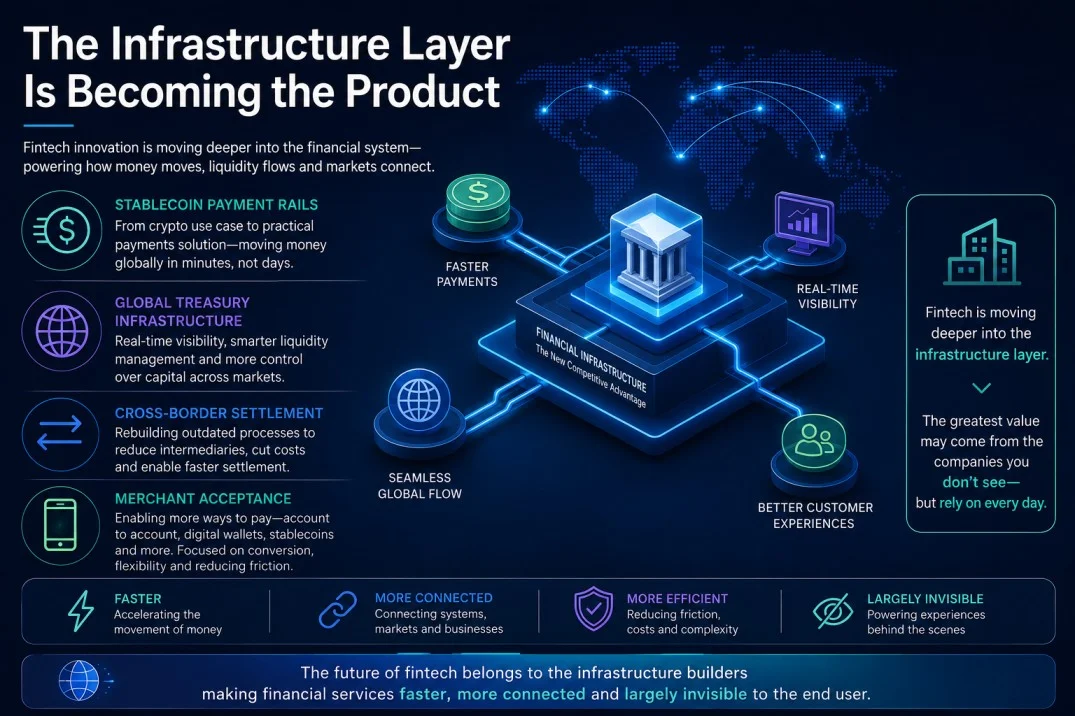
Fintech engineering demand is converging with crypto and AI infrastructure systems
15 May, 202618 mins
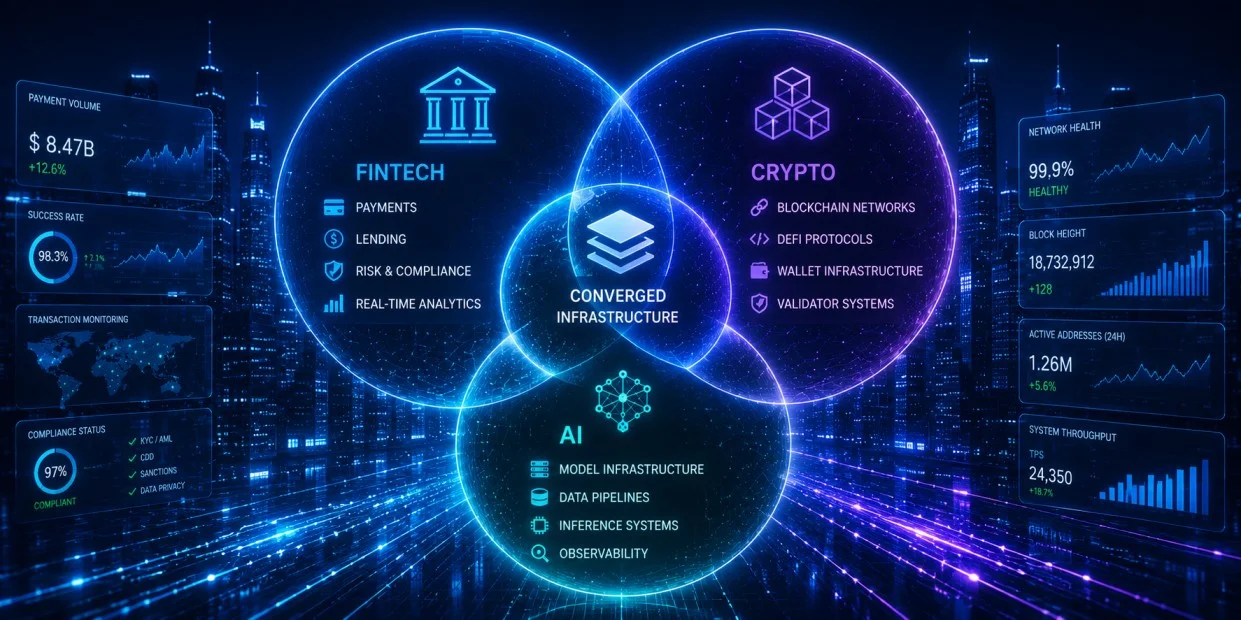
Fintech hiring is increasingly being shaped by infrastructure convergence rather than standalone financial product expansion.
The market is reorganising around:
- payments reliability
- compliance systems
- AI orchestration
- settlement infrastructure
- fraud and risk architecture
- real-time financial processing
This reflects broader operational pressure across modern financial systems.
Fintech companies are no longer operating purely as software platforms.
They increasingly resemble:
- distributed infrastructure operators
- regulated data systems
- settlement architecture providers
- real-time transaction networks
This is changing how firms hire engineers, structure teams, and benchmark operational capability.
Fintech engineering is becoming infrastructure-first
The strongest hiring demand in fintech is increasingly concentrated around infrastructure reliability rather than frontend product delivery.
This reflects growing operational complexity across:
- real-time payments
- open banking
- ledger reconciliation
- fraud detection
- compliance orchestration
- AI-driven financial workflows
The engineering challenge is shifting toward:
- scalability
- uptime
- latency management
- transaction correctness
- operational resilience
This increasingly resembles cloud infrastructure engineering rather than traditional startup product development.
Payments infrastructure remains the highest-density hiring category
Payments infrastructure continues to dominate fintech engineering demand globally.
The rise of:
- instant payments
- embedded finance
- global settlement systems
- cross-border transaction infrastructure
has significantly increased demand for:
- backend infrastructure engineers
- distributed systems engineers
- ledger architecture specialists
- payment reliability engineers
The strongest candidates typically possess:
- high-scale transaction system experience
- fault-tolerant architecture knowledge
- event-driven systems expertise
- low-latency backend capability
This reflects the operational sensitivity of financial infrastructure environments.
Compliance-heavy engineering is expanding rapidly
Compliance engineering has evolved into a standalone infrastructure layer.
This reflects increasing regulatory complexity across:
- payments
- digital banking
- crypto-financial systems
- AI-enabled financial products
Engineering demand is strongest around:
- AML systems
- KYC orchestration
- transaction monitoring
- audit infrastructure
- financial observability systems
- data governance architecture
The market increasingly values engineers capable of balancing:
- reliability
- compliance
- scalability
- automation
This creates significant hiring overlap between fintech and regtech infrastructure environments.
AI systems are reshaping fintech engineering teams
AI implementation is increasingly influencing financial infrastructure hiring.
However, the operational focus differs significantly from consumer AI environments.
Fintech AI systems prioritise:
- fraud detection
- transaction anomaly analysis
- operational automation
- compliance monitoring
- customer support orchestration
- underwriting systems
This is increasing demand for:
- AI infrastructure engineers
- AI reliability specialists
- data orchestration engineers
- ML platform engineers
The emphasis remains operational rather than experimental.
Crypto infrastructure convergence is accelerating
The distinction between fintech and crypto engineering is narrowing.
This convergence is most visible across:
- custody systems
- settlement infrastructure
- tokenised finance
- stablecoin payment rails
- digital asset reconciliation systems
Fintech firms increasingly require engineers with:
- blockchain infrastructure familiarity
- wallet architecture knowledge
- settlement systems understanding
- cryptographic systems exposure
Meanwhile, crypto-native firms are increasingly hiring:
- compliance engineers
- payments infrastructure specialists
- banking systems engineers
This reflects a broader convergence between financial and cryptographic infrastructure systems.
United States fintech hiring remains infrastructure dominant
The US remains the largest fintech infrastructure hiring market globally.
Demand is strongest around:
- payment systems
- AI-enabled financial infrastructure
- fraud systems
- banking APIs
- settlement architecture
Senior infrastructure engineers in US fintech environments frequently command:
- $180,000 to $350,000+ total compensation
- equity upside
- retention incentives for infrastructure-critical roles
The strongest salary growth is visible in:
- payments reliability engineering
- AI infrastructure
- compliance architecture
- fraud systems engineering
UK fintech hiring is increasingly compliance-centric
The UK fintech market remains heavily influenced by:
- regulated banking infrastructure
- payments modernisation
- open banking systems
- financial compliance architecture
London remains one of the largest global hiring hubs for:
- payments infrastructure engineers
- compliance systems engineers
- fintech platform architects
Senior engineers commonly fall within:
- £100,000 to £170,000 base salary
- additional equity depending on growth stage
The strongest demand exists within:
- banking infrastructure
- regulated payments
- financial observability systems
European fintech hiring is shaped by regulatory infrastructure
European fintech engineering demand is increasingly concentrated around:
- compliance systems
- identity verification infrastructure
- PSD2/open banking architecture
- payment security
- cross-border settlement systems
Germany, the Netherlands, and France remain major hiring hubs for:
- payment infrastructure engineers
- fraud systems specialists
- banking API architects
The regulatory environment continues increasing demand for:
- auditability
- financial observability
- operational transparency
Dubai fintech hiring is linked to digital finance expansion
Dubai’s fintech hiring market continues expanding through:
- digital banking
- payment modernisation
- digital asset integration
- cross-border finance infrastructure
Demand is strongest around:
- payment systems
- digital banking APIs
- compliance infrastructure
- financial orchestration platforms
The UAE remains supply constrained for senior infrastructure engineering talent.
This frequently results in:
- relocation incentives
- tax-efficient compensation
- aggressive retention packages
APAC fintech hiring is highly operational
Singapore remains APAC’s largest fintech infrastructure hub.
Hiring demand focuses heavily on:
- payment systems
- banking infrastructure
- financial APIs
- compliance orchestration
- transaction reliability systems
Meanwhile:
- Australia remains strong in banking modernisation
- Hong Kong is expanding digital asset finance hiring
- India continues scaling engineering supply across fintech infrastructure
The strongest hiring activity remains backend and infrastructure-heavy rather than consumer product-oriented.
Reliability engineering is becoming central to fintech hiring
Reliability engineering is increasingly critical across financial infrastructure systems.
Downtime in fintech environments creates:
- direct financial exposure
- regulatory risk
- reputational damage
- settlement disruption
As a result, hiring managers increasingly prioritise:
- SRE capability
- observability systems
- distributed infrastructure expertise
- incident response ownership
The convergence between fintech engineering and cloud infrastructure engineering is accelerating rapidly.
Fintech hiring is increasingly systems-oriented
The strongest long-term market signal is systems convergence.
Modern fintech systems increasingly intersect with:
- AI infrastructure
- blockchain settlement systems
- cloud orchestration
- distributed compute environments
This changes hiring expectations substantially.
Companies increasingly seek engineers capable of operating across:
- financial infrastructure
- compliance systems
- distributed reliability
- AI orchestration layers
rather than narrow product-focused engineering profiles.
Compensation divergence is widening
Compensation growth is strongest within:
- payment infrastructure
- AI-enabled financial systems
- compliance engineering
- reliability infrastructure
- fraud detection systems
Meanwhile, generic product engineering compensation is stabilising across many fintech environments.
This reflects increasing operational complexity and infrastructure dependency.
The market shortage is operational, not general
The fintech market does not broadly lack software engineers.
It lacks engineers capable of operating:
- financial infrastructure
- compliance-sensitive systems
- real-time transaction environments
- AI-enabled financial workflows
The distinction matters significantly for hiring outcomes.
Infrastructure maturity increasingly determines operational competitiveness.
What hiring managers are prioritising in 2026
Fintech hiring managers increasingly assess:
- infrastructure reliability
- distributed systems ownership
- payments architecture capability
- compliance understanding
- observability discipline
- operational scalability
The strongest candidates typically demonstrate:
- backend infrastructure depth
- financial systems exposure
- operational accountability
- scalability optimisation experience
Final takeaways
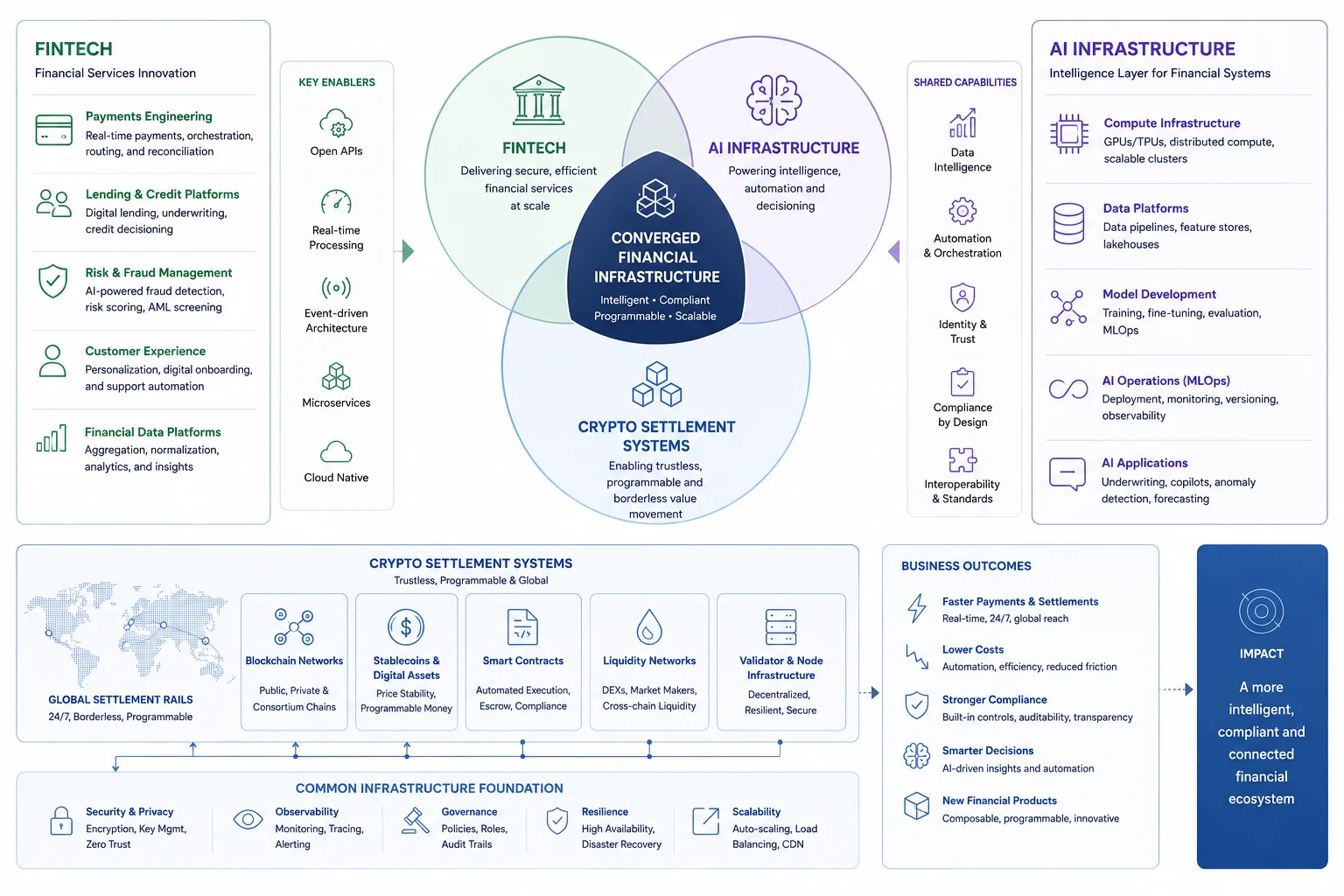
Fintech engineering demand is increasingly converging with:
- AI infrastructure
- crypto settlement systems
- distributed systems engineering
- compliance-heavy operational architecture
The market is shifting toward infrastructure reliability and operational maturity rather than pure product expansion.
This is changing:
- hiring density
- compensation structures
- engineering team composition
- infrastructure investment priorities
Companies optimising purely for frontend product velocity increasingly face operational constraints as financial systems become more infrastructure-intensive.
Frequently Asked Questions
Q: What are the most in-demand fintech engineering roles in 2026?
Demand is strongest around:
- payments infrastructure
- compliance systems
- fraud engineering
- AI-enabled financial systems
- reliability engineering
Q: Why are fintech and crypto hiring markets converging?
Both markets increasingly operate under shared constraints:
- settlement reliability
- compliance infrastructure
- transaction security
- distributed systems scalability
Q: Which fintech markets are hiring most aggressively?
The US, UK, Singapore, Dubai, and selected European financial centres remain the strongest hiring markets globally.
Q: Are AI engineers becoming important in fintech?
Yes. AI systems are increasingly integrated into:
- fraud detection
- operational automation
- compliance monitoring
- customer infrastructure systems
Q: Why are infrastructure engineers highly valued in fintech?
Financial systems require:
- uptime reliability
- transaction correctness
- observability
- scalability
- compliance integrity
These are infrastructure-critical requirements
CTA
Modern fintech systems increasingly operate at the intersection of:
- payments infrastructure
- AI orchestration
- compliance systems
- distributed financial architecture
Hiring strategies now require operational clarity around infrastructure maturity, reliability engineering, and financial systems scalability.
Axiom works with fintech, AI, crypto, and infrastructure companies across the US, UK, Europe, Dubai, and APAC to help build engineering teams operating within production-grade financial systems.
Related Posts

The Infrastructure Layer Is Becoming the Product
03 Jul, 2026