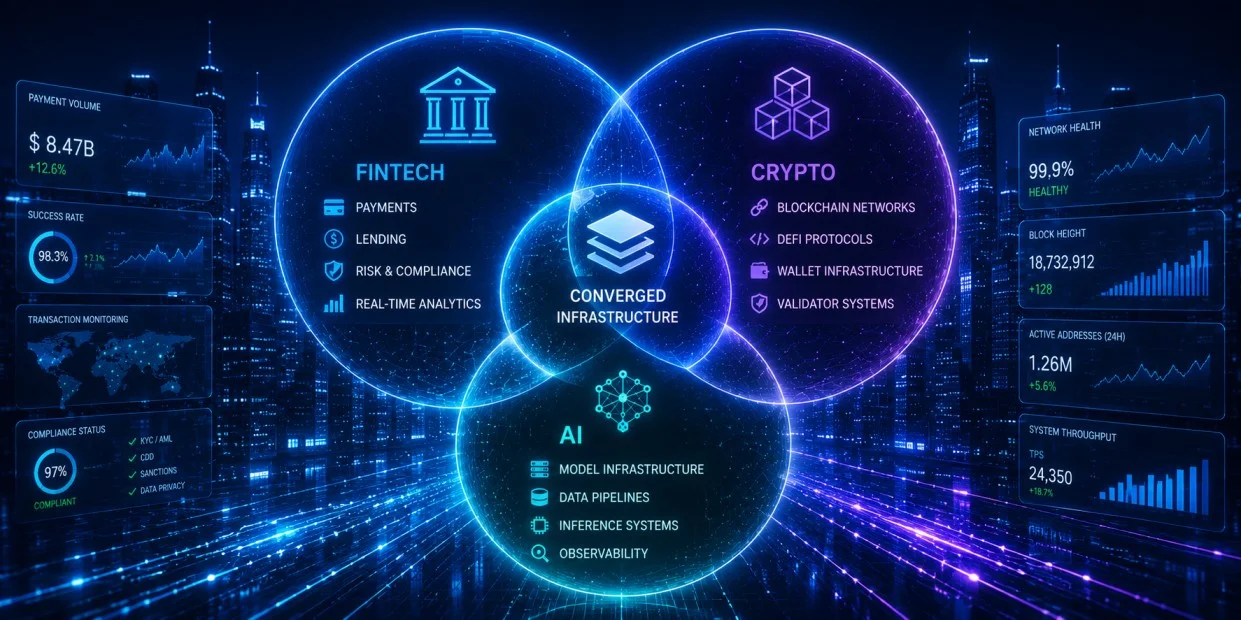
AI hiring is fragmenting into evaluation, infrastructure, and product execution layers
13 May, 202615 mins
The AI hiring market is no longer operating as a single talent category.
What began as broad demand for machine learning engineers has fragmented into specialised execution layers shaped by infrastructure constraints, evaluation reliability, deployment economics, and product integration requirements.
This is changing how companies structure engineering teams, benchmark seniority, and allocate compensation.
The market now separates into three dominant hiring systems:
- inference and infrastructure engineering
- evaluation and reliability systems
- AI product execution
The implication is structural rather than cyclical.
Companies are discovering that model access alone is not a competitive advantage. The operational challenge has shifted toward orchestration, reliability, evaluation correctness, latency optimisation, and workflow integration.
As a result, hiring demand is concentrating around engineers capable of operating production-grade AI systems rather than experimental model environments.
AI hiring demand is shifting away from pure model training
The earlier AI hiring cycle prioritised model researchers and deep learning specialists.
That demand still exists inside frontier labs and infrastructure providers, but most commercial hiring activity has moved downstream toward implementation systems.
In practice, most companies are not building foundation models.
They are building:
- orchestration systems
- evaluation pipelines
- AI-native internal tooling
- retrieval infrastructure
- agentic workflows
- enterprise integration layers
This changes the hiring profile significantly.
The modern AI engineering market increasingly rewards:
- systems engineering capability
- distributed infrastructure experience
- product integration knowledge
- reliability engineering discipline
- applied AI deployment experience
The pattern indicates a broader convergence between software infrastructure hiring and AI implementation systems.
The rise of inference infrastructure hiring
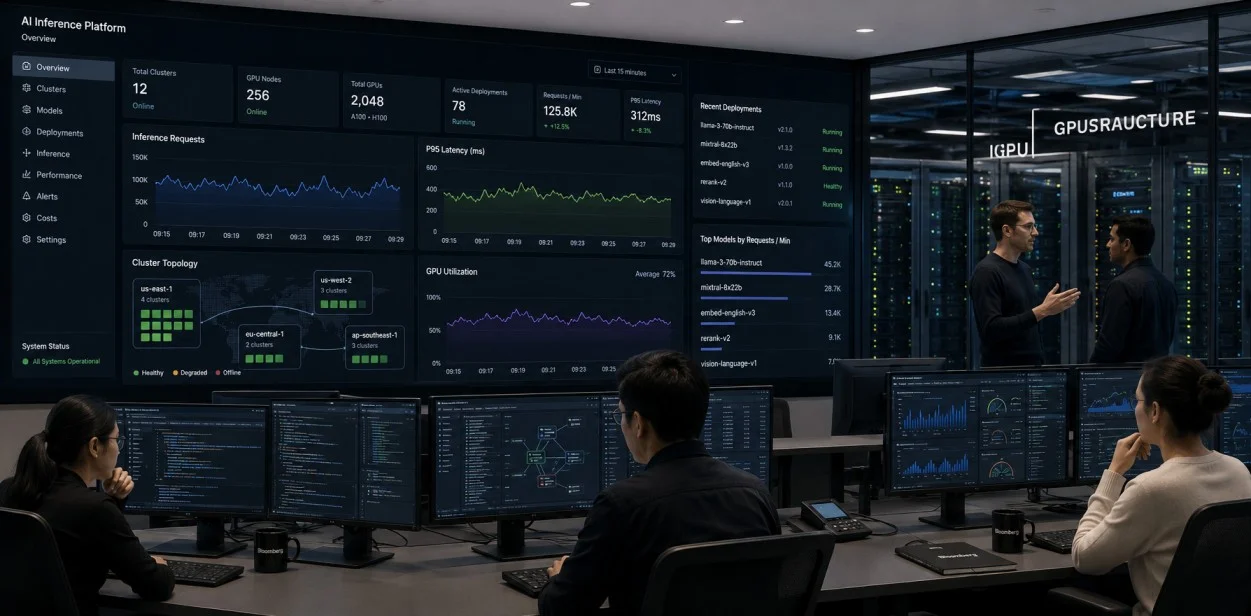
Inference infrastructure has become one of the highest-density hiring categories across AI engineering markets.
This reflects a shift away from experimentation toward operational scale.
Key infrastructure priorities now include:
- GPU orchestration
- model serving systems
- latency reduction
- vector database optimisation
- retrieval augmentation infrastructure
- workload scheduling
- throughput optimisation
The operational challenge is no longer training a model once.
It is maintaining reliable probabilistic systems under production traffic constraints.
This has elevated demand for engineers with backgrounds in:
- distributed systems
- platform engineering
- site reliability engineering
- high-performance compute
- networking infrastructure
Many infrastructure hiring managers now prefer backend distributed systems engineers with AI exposure over purely academic machine learning profiles.
This is particularly visible across:
- US AI infrastructure firms
- UK enterprise AI platforms
- Singapore-based applied AI companies
- Dubai sovereign AI initiatives
Evaluation systems are becoming a standalone engineering function
One of the largest structural changes in AI hiring is the emergence of evaluation engineering as an independent execution layer.
Evaluation systems are now critical because probabilistic outputs create reliability uncertainty.
Traditional software engineering assumes deterministic behaviour.
AI systems do not.
As deployment scales increase, organisations require:
- hallucination monitoring
- output benchmarking
- retrieval validation
- agent reliability testing
- prompt regression testing
- safety scoring systems
This is creating new demand for:
- evaluation engineers
- AI reliability engineers
- LLMOps specialists
- AI QA infrastructure engineers
The market remains supply constrained because few engineers possess both software infrastructure discipline and probabilistic systems understanding.
This shortage is particularly severe in enterprise environments where compliance and operational risk matter.
AI product engineering is emerging as a separate role category
AI product engineering is increasingly distinct from machine learning engineering.
The difference is architectural.
Machine learning engineering focuses on model systems.
AI product engineering focuses on workflow integration and user-facing execution systems.
AI product engineers typically operate across:
- API orchestration
- retrieval workflows
- prompt architecture
- product instrumentation
- user interaction layers
- internal automation systems
This role category is expanding rapidly because most companies are implementing existing models rather than training proprietary ones.
In practice, the strongest AI product engineers often come from:
- backend engineering
- full-stack product engineering
- developer tooling
- workflow automation environments
Pure research backgrounds are becoming less dominant outside model labs.

The AI hiring market is fragmenting geographically
Regional AI hiring markets are now diverging based on infrastructure maturity, capital availability, regulatory positioning, and enterprise adoption patterns.
United States
The US remains the dominant AI infrastructure hiring market.
Demand is concentrated around:
- inference systems
- model serving
- distributed compute
- AI developer tooling
- AI security infrastructure
Compensation remains highest globally.
Senior infrastructure engineers in major US AI firms frequently command:
- $220,000 to $450,000+ total compensation
- significant equity exposure
- infrastructure retention incentives
The US market also shows the strongest concentration of evaluation-system hiring.
United Kingdom
The UK market is increasingly enterprise-AI focused.
Hiring density is strongest in:
- AI compliance systems
- financial AI infrastructure
- AI-enabled productivity tooling
- regulated workflow automation
London-based AI hiring increasingly overlaps with fintech infrastructure engineering.
This reflects enterprise adoption rather than frontier model competition.
Senior AI infrastructure engineers in the UK commonly fall within:
- £110,000 to £180,000 base salary
- additional equity depending on growth stage
Europe
European AI hiring remains fragmented across regulatory and infrastructure ecosystems.
Germany, France, and the Netherlands are seeing growth in:
- industrial AI systems
- manufacturing automation
- enterprise reliability tooling
- compliance-heavy AI deployment
EU AI regulation is also increasing demand for:
- AI governance specialists
- AI risk infrastructure engineers
- explainability systems engineers
This reflects Europe’s compliance-first implementation environment.
Dubai and UAE
Dubai’s AI hiring market is increasingly state-backed and infrastructure-led.
Demand is strongest around:
- sovereign AI systems
- cloud infrastructure
- smart city execution layers
- government automation systems
The UAE market remains talent-short because local supply is still developing.
As a result, compensation packages frequently include:
- tax advantages
- relocation support
- long-term infrastructure incentives
APAC
APAC AI hiring remains highly diversified.
Singapore is functioning as the region’s enterprise AI infrastructure hub.
Meanwhile:
- Australia focuses heavily on enterprise adoption
- Japan prioritises robotics and industrial AI
- India remains a major AI engineering supply market
Singapore compensation for senior AI infrastructure engineers frequently ranges between:
- SGD 160,000 to SGD 300,000+
- equity for venture-backed firms
AI hiring is increasingly shaped by infrastructure economics
Another structural shift is the growing influence of compute economics on hiring strategy.
AI systems remain expensive to operate.
This creates pressure around:
- inference efficiency
- retrieval optimisation
- workload management
- GPU utilisation
- model routing systems
As a result, engineering teams are prioritising:
- optimisation discipline
- systems reliability
- resource efficiency
The market increasingly values engineers capable of reducing operational AI costs without degrading performance.
This resembles earlier cloud infrastructure hiring cycles where scalability discipline became commercially critical.
The generalist AI engineer is becoming less viable
The market is moving away from the “full-stack AI engineer” narrative.
The execution environment has become too complex.
Modern AI systems now require specialised coordination across:
- infrastructure
- orchestration
- evaluation
- product integration
- security
- compliance
This is fragmenting seniority signals.
A strong infrastructure engineer may not succeed in AI product execution.
Similarly, a strong model engineer may struggle with enterprise orchestration systems.
Companies are therefore restructuring hiring around specialised execution layers rather than broad AI branding.
AI hiring signals are converging with platform engineering
The strongest overlap in today’s AI market is between AI systems and platform engineering.
This convergence reflects operational reality.
Most production AI environments now resemble distributed infrastructure systems more than research labs.
Key overlap areas include:
- observability
- orchestration
- deployment automation
- scalability
- reliability engineering
- internal developer platforms
This explains why many AI hiring teams increasingly recruit from:
- cloud infrastructure
- backend systems
- DevOps
- SRE environments
rather than purely academic AI pathways.
Why the AI talent shortage narrative is incomplete
There is no universal AI talent shortage.
There is a shortage of deployable AI systems engineers.
The distinction matters.
The market contains many candidates with:
- model experimentation experience
- AI tooling familiarity
- coursework exposure
But relatively few engineers can:
- operate production AI systems
- maintain inference reliability
- optimise distributed workloads
- build evaluation infrastructure
- manage enterprise AI deployment constraints
The hiring bottleneck is operational maturity rather than headline AI awareness.
Compensation fragmentation is accelerating
Compensation divergence is becoming increasingly visible across AI execution layers.
Infrastructure-heavy roles now command the highest premiums because:
- operational risk is high
- supply remains constrained
- systems complexity is increasing
The strongest compensation growth is visible in:
- inference infrastructure
- AI security
- evaluation systems
- AI reliability engineering
Meanwhile, generic prompt-engineering roles are already seeing commoditisation pressure.
This reflects broader market maturation.
What hiring managers are prioritising in 2026
Hiring priorities are increasingly operational rather than experimental.
The strongest candidates now demonstrate:
- production deployment experience
- systems scalability understanding
- orchestration architecture capability
- infrastructure optimisation
- reliability discipline
Portfolio quality matters more than theoretical AI exposure.
In practice, companies increasingly assess:
- deployment history
- infrastructure complexity
- operational ownership
- latency optimisation experience
- reliability tradeoff decisions
This is particularly true in enterprise AI environments.
The future structure of AI engineering teams
AI engineering teams are increasingly resembling layered infrastructure organisations.
A typical mature AI team now includes:
- infrastructure engineers
- evaluation engineers
- AI product engineers
- orchestration specialists
- reliability engineers
- compliance and governance specialists
This is structurally different from the earlier “small AI experimentation team” model.
As AI systems become operational infrastructure, team structures become more specialised.
Final takeaways
AI hiring is no longer a singular market category.
It is fragmenting into specialised operational systems shaped by:
- infrastructure complexity
- evaluation reliability
- deployment economics
- orchestration requirements
The strongest hiring demand is increasingly concentrated around engineers capable of operating AI systems under production constraints.
This changes:
- compensation structures
- seniority signals
- hiring strategies
- engineering team design
Companies that continue hiring for broad “AI engineer” profiles without execution-layer clarity are likely to face increasing mismatch rates.
The market is rewarding specialised operational capability over general AI branding.
Frequently Asked Questions
Q: What are the most in-demand AI roles in 2026?
The strongest demand is concentrated around:
- AI infrastructure engineering
- inference systems
- evaluation engineering
- LLMOps
- AI reliability engineering
- AI product engineering
Q: Are machine learning engineers still in demand?
Yes, but demand has shifted toward deployment and operational systems rather than pure research environments.
Q: Which regions are hiring AI engineers most aggressively?
The US remains the largest market, followed by the UK, Singapore, Dubai, and selected European infrastructure hubs.
Q: Why are AI infrastructure engineers commanding higher salaries?
Inference systems, orchestration infrastructure, and evaluation reliability are operationally critical and supply constrained.
Q: Is there still a shortage of AI talent?
There is a shortage of engineers capable of operating production AI systems at scale rather than a shortage of AI awareness generally.
CTA
Companies building AI systems are increasingly competing on infrastructure execution rather than model access alone.
Hiring strategy now requires clarity around evaluation systems, orchestration layers, reliability engineering, and operational deployment maturity.
Axiom works with AI, infrastructure, fintech, and distributed systems companies across the US, UK, Europe, Dubai, and APAC to help structure and scale specialised engineering teams operating in production-critical environments.