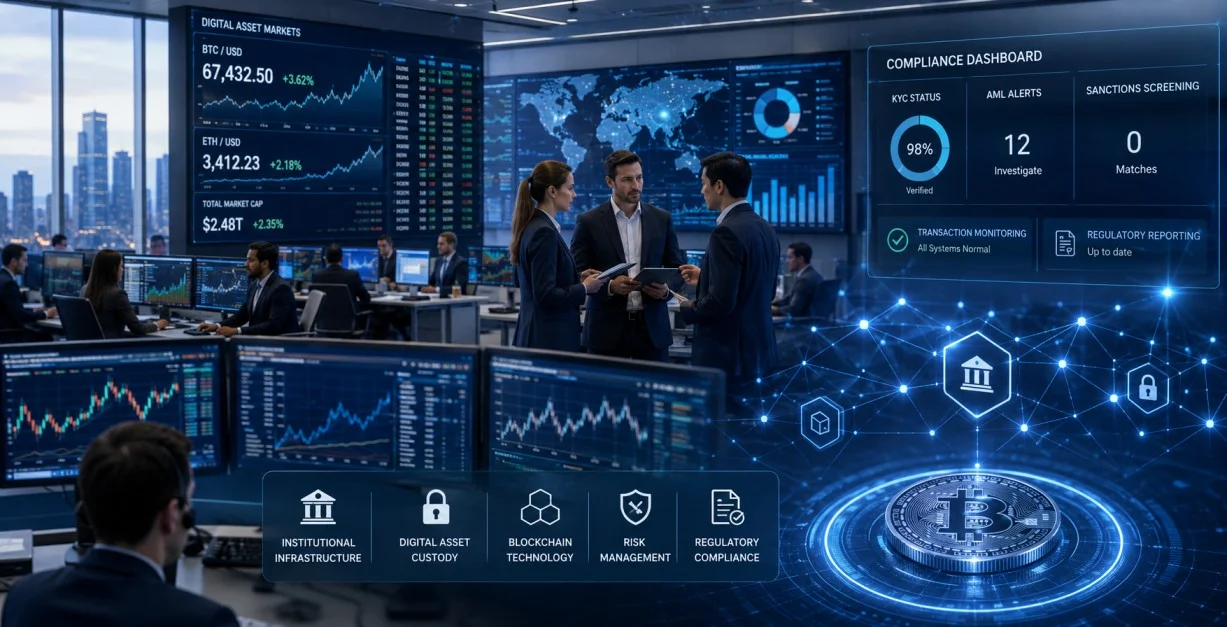
Digital asset hiring is consolidating around institutional infrastructure in the United States
15 Jun, 202615 mins
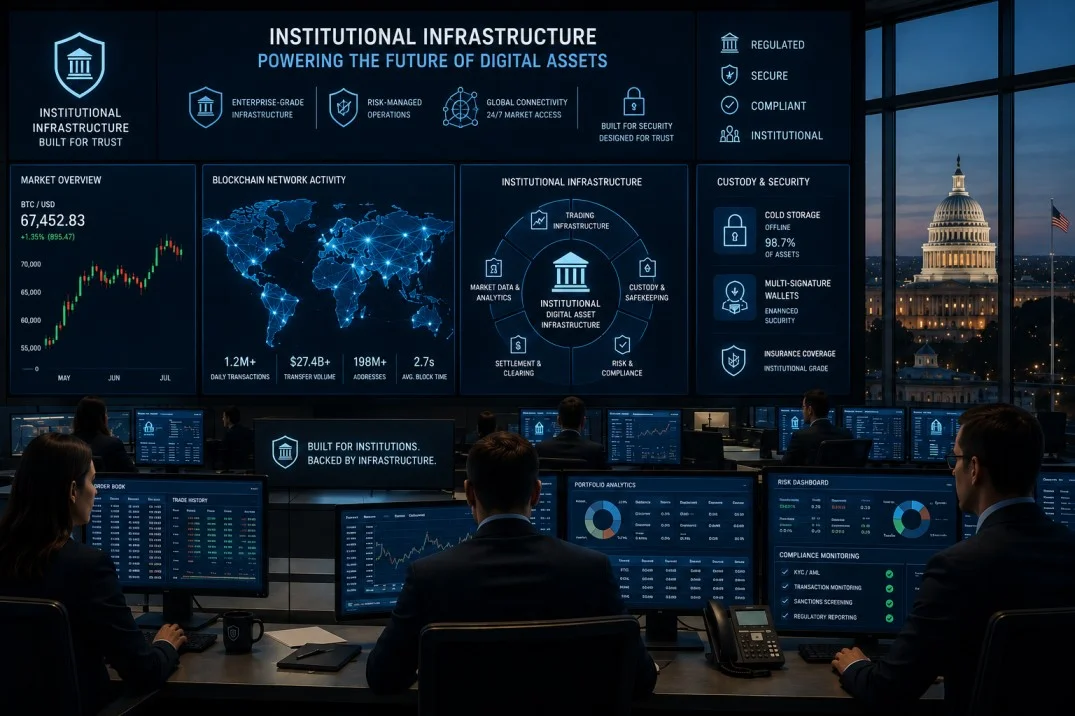
The US digital asset market has entered a different hiring cycle
For most of the previous decade, digital asset hiring followed market sentiment.
Bull markets created aggressive recruitment activity. Bear markets compressed headcount. Hiring demand often mirrored token prices rather than underlying infrastructure development.
That relationship is weakening.
In 2026, hiring demand across the United States increasingly reflects the growth of institutional digital asset infrastructure rather than speculative activity.
Banks are expanding custody capabilities. Asset managers are building digital asset products. Payment companies are integrating blockchain settlement systems. Exchanges are investing in regulatory architecture and operational resilience.
The result is a structural shift in hiring demand.
The market no longer prioritises growth at all costs. It prioritises reliability, security, compliance, settlement, and execution.
This has changed the types of professionals entering the market and the skills employers are willing to pay premium compensation for.
Institutional participation is reshaping talent demand
The most significant hiring signal across US digital assets is institutional participation.
When pension funds, asset managers, banks, and payment providers enter a market, hiring requirements change immediately.
Engineering teams become more compliance-aware.
Security requirements increase.
Infrastructure must support significantly larger transaction volumes.
Operational risk becomes a board-level concern.
The hiring market therefore begins to resemble financial infrastructure rather than startup software development.
This shift explains why demand has expanded beyond traditional blockchain engineering.
Companies increasingly seek professionals capable of operating within regulated environments while maintaining deep technical expertise.
The pattern indicates that digital assets are becoming another layer of financial infrastructure rather than a separate industry category.
Engineering demand is moving toward execution-critical systems
The strongest hiring activity is concentrated around infrastructure roles.
Demand remains elevated for blockchain engineers, but employers increasingly prioritise engineers working on execution systems rather than speculative applications.
Key hiring areas include:
Custody infrastructure
Institutional custody remains one of the fastest-growing segments.
Engineering teams require expertise in:
- Multi-party computation (MPC)
- Hardware security modules
- Key management architecture
- Secure transaction workflows
- Cryptographic security systems
Execution correctness matters because infrastructure failures directly impact asset security.
Settlement and payment infrastructure
Digital asset settlement systems are becoming increasingly important as payment providers explore blockchain-enabled transfers.
Employers are hiring engineers capable of designing:
- High-availability transaction systems
- Settlement reconciliation infrastructure
- Treasury management systems
- Cross-border payment architecture
Compliance technology
Compliance has become a significant hiring category.
Engineering teams increasingly work alongside legal and risk departments.
Demand continues to grow for professionals experienced in:
- Transaction monitoring
- AML systems
- KYC infrastructure
- Risk analytics
- Regulatory reporting systems
The emergence of digital asset operations specialists
One of the most overlooked hiring trends involves operational talent.
Many organisations focused exclusively on engineering hiring during previous market cycles.
Today, operational resilience has become equally important.
Digital asset firms increasingly recruit specialists with backgrounds in:
- Prime brokerage operations
- Trade support
- Treasury management
- Custody operations
- Financial controls
- Risk management
Many of these professionals originate from traditional finance.
The convergence between financial infrastructure and digital asset infrastructure has created a large market for transferable skills.
Compensation remains highly competitive
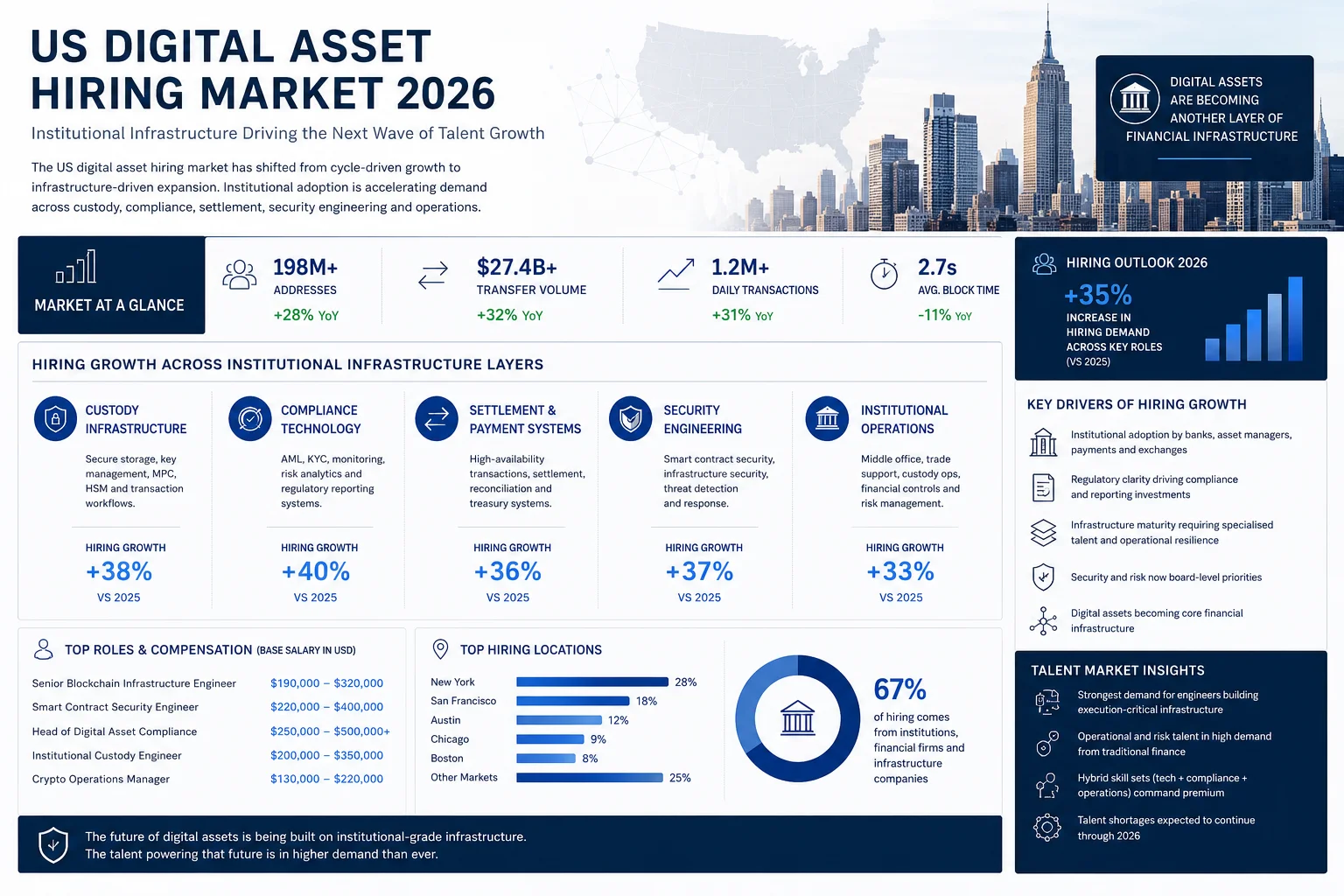
Although compensation growth has moderated compared with previous bull markets, specialised talent continues to command premium salaries.
Approximate US compensation ranges in 2026:
- Senior Blockchain Infrastructure Engineer
- $190,000 to $320,000 base salary
- Smart Contract Security Engineer
- $220,000 to $400,000 base salary
- Head of Digital Asset Compliance
- $250,000 to $500,000+ total compensation
- Institutional Custody Architect
- $250,000 to $450,000 base salary
- Digital Asset Product Manager
- $180,000 to $320,000 total compensation
Compensation remains highest where technical expertise intersects with regulatory complexity.
Why hiring has become more difficult
Many organisations assume the talent market expanded significantly after previous industry downturns.
The reality is more complicated.
The strongest candidates remain highly selective.
Several constraints continue to affect hiring:
Skill adjacency remains limited
Traditional finance professionals often lack blockchain expertise.
Blockchain specialists often lack institutional experience.
Professionals who possess both skill sets remain scarce.
Security talent remains constrained
Security engineering continues to represent one of the smallest talent pools within digital assets.
The consequences of mistakes are severe.
Employers therefore compete aggressively for proven security specialists.
Regulatory understanding is increasingly valuable
Companies need professionals capable of operating across technology, compliance, and financial infrastructure.
The overlap remains limited.
What this means for hiring managers
The strongest hiring strategies increasingly focus on transferable expertise rather than exact experience.
Employers that insist on highly specific industry backgrounds often struggle to fill positions.
Successful firms identify adjacent talent pools from:
- Capital markets
- Payments
- Cybersecurity
- Banking infrastructure
- Cloud engineering
- Financial risk management
The market rewards organisations capable of evaluating capability rather than matching keywords.
Why recruitment partners are becoming more important
The fragmentation of digital asset hiring creates significant sourcing challenges.
Candidates frequently sit at the intersection of multiple industries.
Traditional recruitment firms often lack sufficient market understanding.
Generalist hiring approaches struggle to identify professionals with relevant combinations of technical, regulatory, and operational expertise.
This explains why specialist recruitment partners have become increasingly important.
A recruitment partner operating across blockchain, crypto, fintech, and financial infrastructure can access talent pools that remain invisible through conventional sourcing methods.
The next phase of US digital asset hiring
The next phase of hiring growth is unlikely to be driven by speculation.
Instead, hiring demand appears increasingly connected to infrastructure maturity.
The strongest signals point toward continued growth across:
- Custody infrastructure
- Stablecoin systems
- Digital asset payments
- Institutional trading infrastructure
- Compliance technology
- Security engineering
- Treasury management systems
These are the systems that enable large-scale adoption.
As a result, hiring demand increasingly reflects infrastructure requirements rather than market enthusiasm.
Final thoughts
US digital asset hiring is becoming less cyclical and more institutional.
Engineering demand is consolidating around infrastructure, security, settlement, and compliance systems.
The organisations building these systems face a common challenge: specialised talent remains limited.
Companies capable of accessing adjacent talent pools and evaluating system-level expertise will have a significant hiring advantage.
At Axiom, we work with digital asset firms, infrastructure providers, fintech organisations, and institutional market participants to identify specialised talent across engineering, product, compliance, and operations functions.
FAQs
Q: What are the most in-demand digital asset roles in the US?
Blockchain infrastructure engineers, custody architects, security engineers, compliance specialists, and digital asset product managers.
Q: Is digital asset hiring still growing in 2026?
Yes, particularly across institutional infrastructure, compliance systems, custody, and settlement architecture.
Q: What is the biggest hiring challenge?
Finding professionals with both blockchain expertise and institutional financial infrastructure experience.