The Infrastructure Layer Is Becoming the Product
03 Jul, 202610 mins
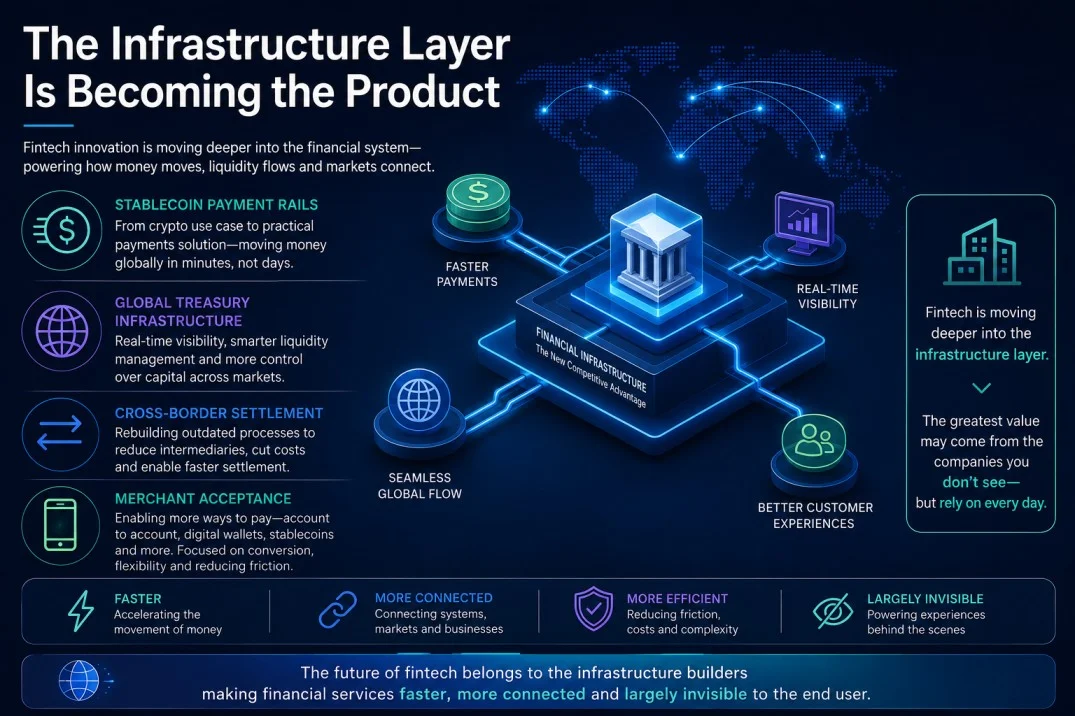
The next wave of fintech innovation is not being driven by another consumer app. It is happening deeper within the financial system, in the infrastructure that moves money, manages liquidity and connects markets.
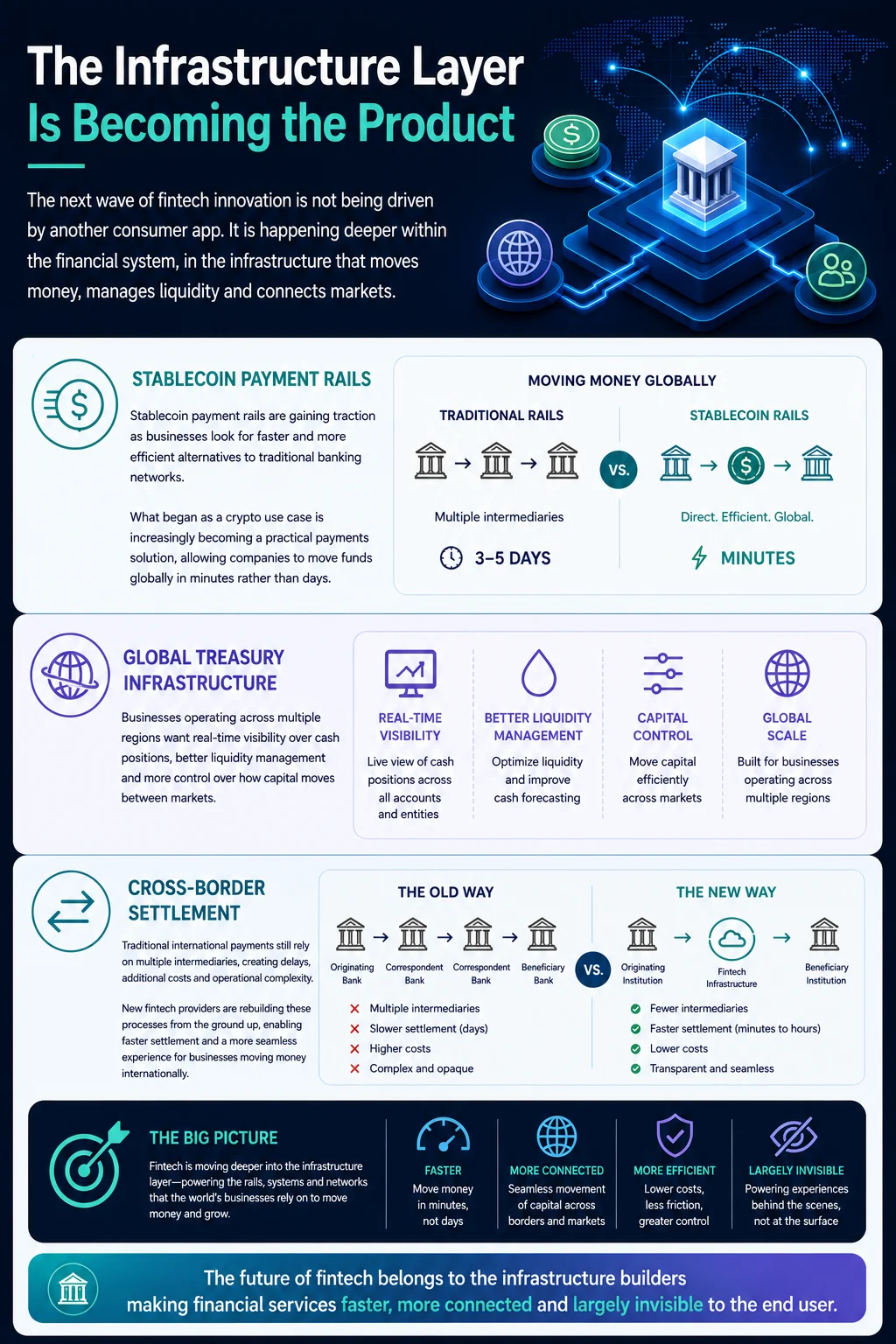
Stablecoin payment rails are gaining traction as businesses look for faster and more efficient alternatives to traditional banking networks. What began as a crypto use case is increasingly becoming a practical payments solution, allowing companies to move funds globally in minutes rather than days.
Global treasury infrastructure is also becoming a priority. Businesses operating across multiple regions want real-time visibility over cash positions, better liquidity management and more control over how capital moves between markets.
Cross-border settlement remains another major area of investment. Traditional international payments still rely on multiple intermediaries, creating delays, additional costs and operational complexity. New fintech providers are rebuilding these processes from the ground up, enabling faster settlement and a more seamless experience for businesses moving money internationally.
Merchant acceptance is evolving too. Businesses increasingly want to offer customers more ways to pay, including account-to-account payments, digital wallets and stablecoins. The focus is moving beyond payment processing towards improving conversion, reducing friction and creating more flexible payment experiences.
The common theme is clear: fintech is moving deeper into the infrastructure layer.
The businesses that create the greatest value may not be the ones consumers interact with directly. They are likely to be the companies making financial services faster, more connected and largely invisible to the end user.