
AI Is Reshaping Fintech and Triggering a Race for Talent
03 Jul, 202610 mins
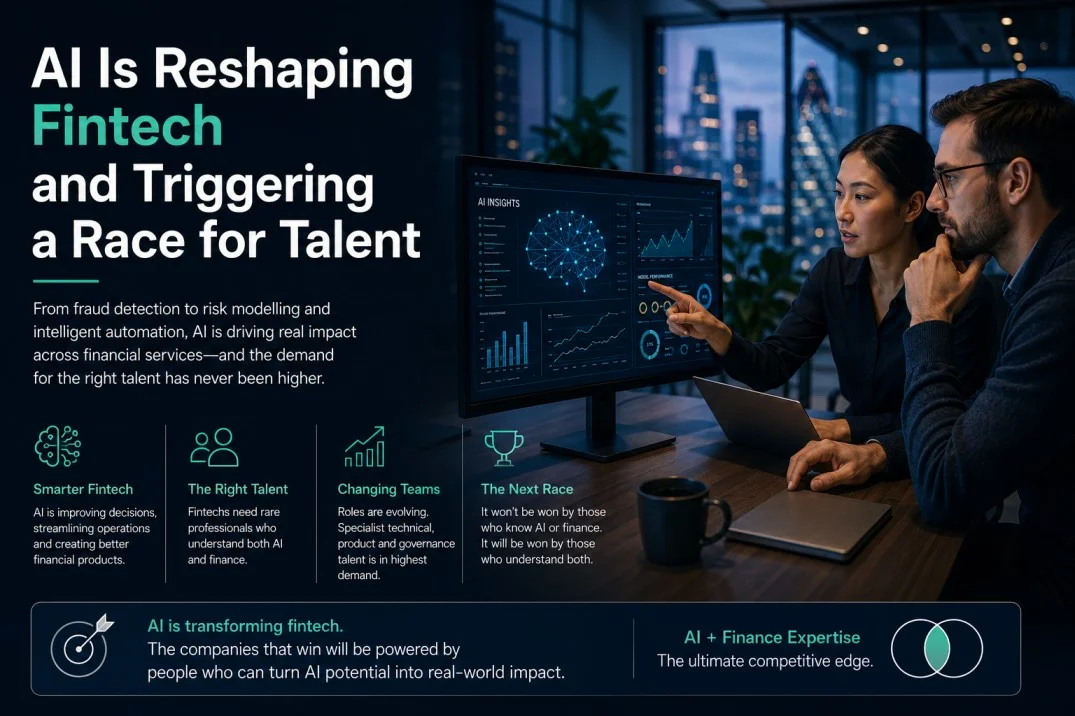
Fintech companies are no longer asking whether they should adopt AI. The question is where it can create measurable value, and whether they have the talent required to deploy it effectively.
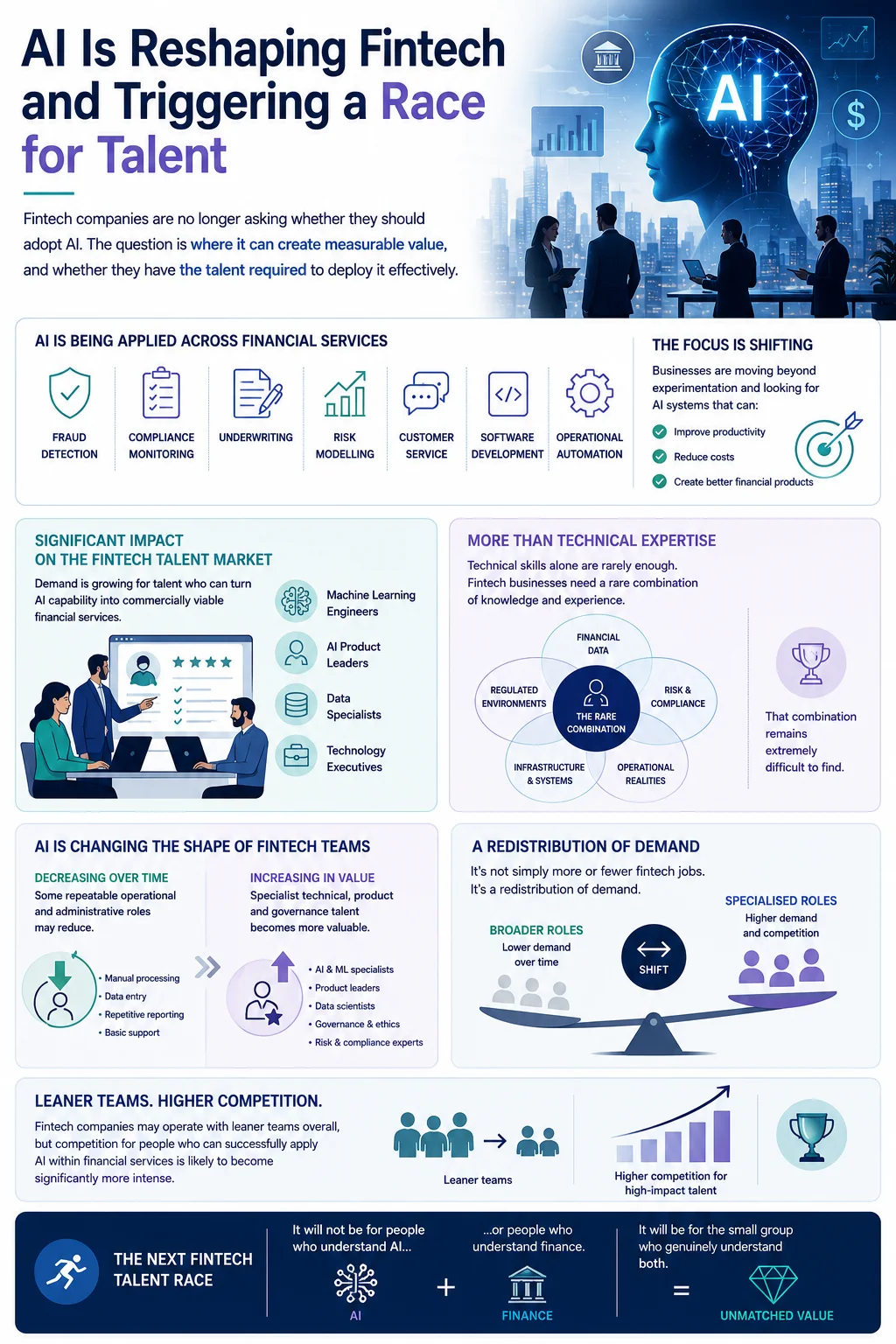
Across financial services, AI is increasingly being applied to fraud detection, compliance monitoring, underwriting, risk modelling, customer service, software development and operational automation.
The focus is also shifting. Businesses are moving beyond experimentation and looking for AI systems that can improve productivity, reduce costs and create better financial products.
This is having a significant impact on the fintech talent market.
Demand is growing for machine-learning engineers, AI product leaders, data specialists and technology executives who can turn AI capability into commercially viable financial services.
However, technical expertise alone is rarely enough.
Fintech businesses increasingly need people who also understand financial data, regulated environments, risk, infrastructure and the operational realities of building financial products. That combination remains extremely difficult to find.
AI is also changing the shape of fintech teams. Some repeatable operational and administrative roles may reduce over time, while specialist technical, product and governance talent becomes more valuable.
The result is not simply more or fewer fintech jobs. It is a redistribution of demand.
Fintech companies may operate with leaner teams overall, but competition for people who can successfully apply AI within financial services is likely to become significantly more intense.
The next fintech talent race will not be for people who understand AI or finance.
It will be for the small group who genuinely understand both.
Related Posts


The Infrastructure Layer Is Becoming the Product
03 Jul, 2026