
Fintech Engineering Demand Is Shifting Toward Compliance-Heavy Infrastructure Across Europe
25 Jun, 202615 mins

European fintech hiring is entering a period of structural reorganisation.
Unlike previous cycles driven primarily by venture capital expansion and digital banking growth, hiring decisions are increasingly shaped by regulatory architecture.
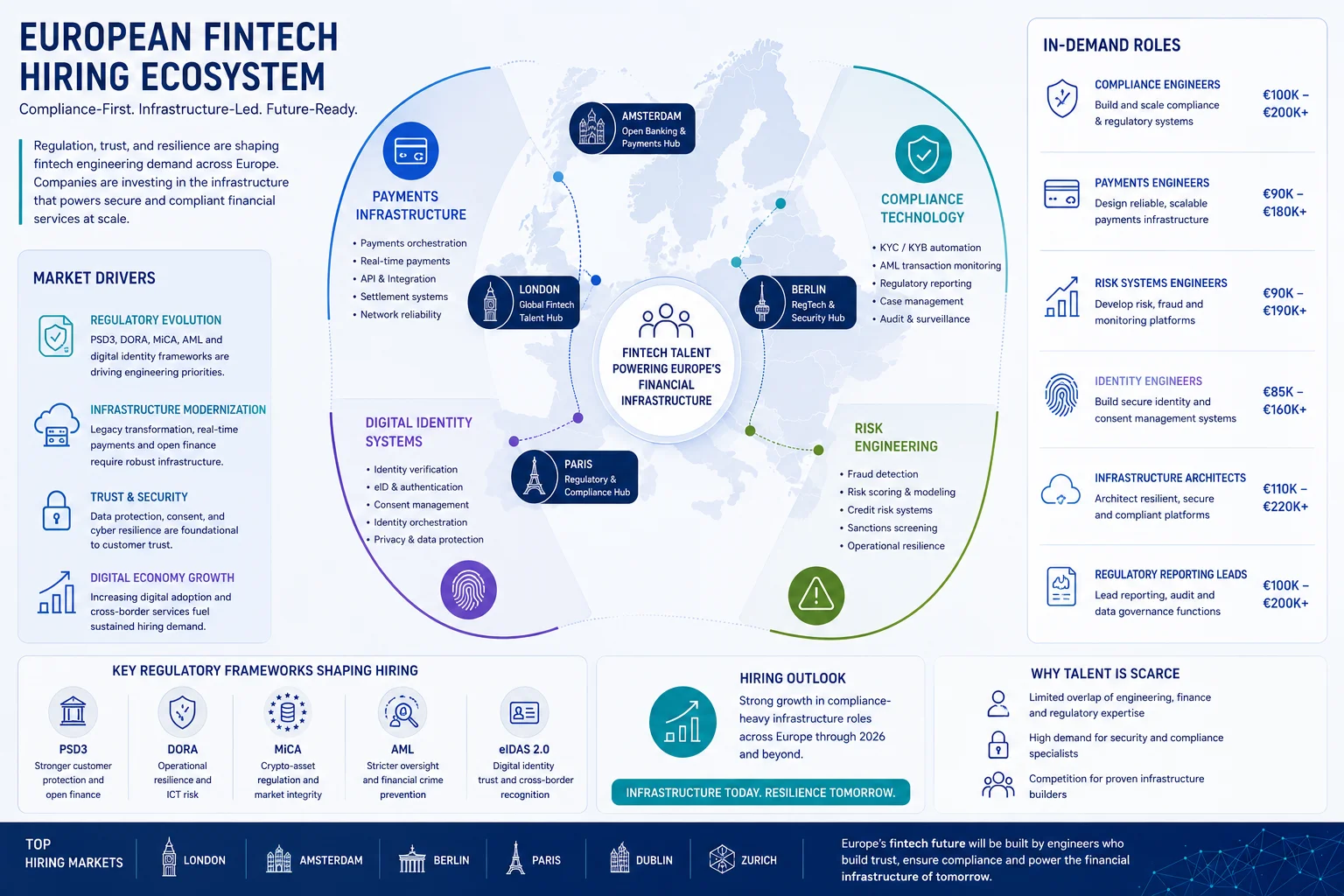
Across the European Union, financial technology companies are adapting to evolving frameworks covering payments, digital identity, data governance, operational resilience, and financial security.
This has altered the composition of demand.
The market increasingly rewards professionals capable of operating at the intersection of engineering systems and regulatory requirements.
In practice, Europe's fintech talent market is becoming more compliance-intensive than its US counterpart.
Regulation Is Driving Infrastructure Investment
European fintech businesses operate within one of the world's most complex regulatory environments.
Frameworks influencing hiring include:
- PSD3
- Open Banking regulations
- DORA
- MiCA
- AML frameworks
- Digital identity initiatives
These frameworks influence how products are built from the earliest stages of development.
As a result, engineering teams increasingly include specialists focused on regulatory implementation.
Hiring demand reflects this shift.
Companies are prioritising professionals who understand how regulatory constraints affect system architecture.
Open Banking Is Entering A New Phase
Open Banking initially focused on connectivity.
The next phase focuses on infrastructure quality.
Financial institutions increasingly require:
- API reliability
- Data governance
- Consent management
- Identity verification
- Risk monitoring
These requirements create demand for engineers with experience operating large-scale financial systems.
The strongest candidates combine traditional software engineering expertise with an understanding of banking infrastructure.
Compliance Technology Is Becoming Core Infrastructure
Compliance functions continue moving closer to engineering teams.
Across Europe, financial institutions increasingly automate:
- KYC workflows
- AML monitoring
- Risk assessment
- Regulatory reporting
- Fraud prevention
This evolution creates demand for a specialised category of compliance-focused engineers.
Many firms now treat compliance systems as mission-critical infrastructure rather than operational support functions.
Digital Identity Systems Are Expanding
Digital identity represents one of the most important infrastructure opportunities across European fintech.
Governments and financial institutions continue investing in trusted identity frameworks.
This trend supports hiring demand for:
- Identity engineers
- Security architects
- Infrastructure specialists
- Privacy-focused product managers
As digital identity adoption expands, hiring demand is likely to accelerate further.
Salary Trends Across Europe
Key compensation ranges include:
Senior Payments Engineers: €90,000–€180,000+
Compliance Technology Leaders: €120,000–€250,000+
Infrastructure Architects: €110,000–€220,000+
Risk Systems Engineers: €90,000–€190,000+
Compensation varies significantly between London, Amsterdam, Berlin, Zurich, Paris, and Dublin.
However, infrastructure-focused roles consistently attract premium compensation.
Why Specialist Talent Remains Scarce
European fintech faces a persistent talent allocation challenge.
Many engineers possess software development expertise.
Far fewer understand:
- Financial systems
- Regulatory architecture
- Payments infrastructure
- Security-critical environments
This skill shortage continues influencing recruitment outcomes.
Organizations increasingly compete for candidates with highly transferable infrastructure experience.
What Hiring Managers Should Expect In 2026
The market indicates continued demand growth for professionals capable of connecting engineering execution with regulatory requirements.
Hiring strategies focused solely on product growth are becoming less effective.
Infrastructure resilience, compliance readiness, and operational reliability increasingly determine recruitment priorities.
Conclusion
European fintech hiring is becoming increasingly shaped by regulatory and operational constraints.
The strongest demand sits within compliance-heavy infrastructure systems rather than consumer-facing applications.
Organizations that align hiring plans with these structural shifts will be better positioned to scale within Europe's evolving financial environment.
FAQs
What fintech skills are most valuable in Europe?
Payments infrastructure, compliance engineering, risk systems, security architecture, and digital identity expertise.
Is regulation reducing fintech hiring?
No. Regulation is changing the types of roles companies hire for.
Which European cities have the strongest fintech demand?
London, Amsterdam, Berlin, Paris, Dublin, and Zurich continue attracting substantial fintech investment and talent demand.